
The Ultimate BPC-157 & TB-500 Tissue Regeneration Protocol
Colloquially known in performance circles as the "Wolverine Stack," combining BPC-157 and TB-500 represents the gold standard in research-grade connective tissue, tendon, and muscular recovery. While BPC-157 delivers localized angiogenic and fibroblast-stimulating signals, TB-500 provides systemic cellular migration and anti-inflammatory support via actin upregulation. This comprehensive clinical guide breaks down exact reconstitution mathematics, separate versus blended vial protocols, and real-world cycle durations. Disclaimer: All information provided is strictly for educational and harm-reduction research purposes and does not constitute formal medical advice.
1. Mechanism of Action: Why Stack BPC-157 and TB-500?
Athletes pushing massive loads during intensive Steroid Cycles frequently experience a common physiological bottleneck: skeletal muscle hypertrophy outpaces the structural adaptation of tendons and ligaments. Because connective tissues receive remarkably poor vascular blood supply compared to muscle bellies, micro-tears and tendinopathy can take months to resolve naturally. Understanding the optimal bpc 157 tb 500 dosage allows athletes to target tissue repair through two distinct yet complementary biochemical pathways.
BPC-157 (Body Protection Compound-157) is a synthetic pentadecapeptide derived from human gastric juice. Its primary regenerative mechanism centers on the upregulation of Vascular Endothelial Growth Factor (VEGF) and the promotion of nitric oxide synthesis via the Akt-eNOS pathway. Simply put, BPC-157 accelerates angiogenesis—the formation of new microscopic blood vessels directly inside avascular tendon and ligament matrices. Furthermore, it significantly increases growth hormone receptor expression on local fibroblasts, priming damaged cells to synthesize new collagen fibers rapidly.
TB-500 (Thymosin Beta-4 Fragment) is a synthetic fraction of the naturally occurring 43-amino-acid protein Thymosin Beta-4. While BPC-157 prepares the local vascular infrastructure and signals fibroblasts, TB-500 acts as a systemic cellular mobilizer. Its primary mechanism of action is the sequestration and upregulation of G-actin, a vital structural protein required for cell contraction, migration, and proliferation. By binding to actin, TB-500 allows endothelial cells, keratinocytes, and stem/progenitor cells to travel rapidly through the bloodstream and penetrate dense, inflamed extracellular matrices while simultaneously downregulating pro-inflammatory cytokines.
Source Lab-Verified BPC-157 & Recovery Peptides
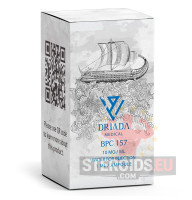
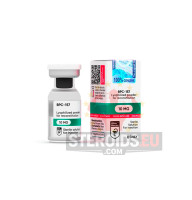
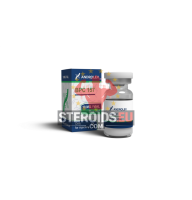
Accelerate your soft-tissue and joint rehabilitation with pharmaceutical-grade lyophilized peptides such as BPC-157 Hilma Biocare 10mg/vial, BPC-157 2mg kits with bacteriostatic water, and Androlex BPC-157 10mg. Every batch is independently verified for >99% purity and shipped discreetly from our EU warehouse.
2. Pharmacokinetic Comparison: Separate Vials vs. Pre-Mixed Blends
When researching a bpc 157 and tb 500 dosage reddit thread or clinical forum, one of the biggest points of confusion revolves around administration frequency. Specifically, users debate whether to purchase separate lyophilized vials (such as an Androlex BPC-157 10mg vial alongside a standalone TB-500 vial) or utilize a pre-mixed bpc 157 tb 500 10mg blend dosage (typically containing 5mg of BPC-157 and 5mg of TB-500 in a single bottle).
From a purely pharmacokinetic standpoint, the two peptides exhibit vastly different elimination half-lives. BPC-157 has a relatively short plasma half-life of roughly 4 to 6 hours, making daily—or ideally twice-daily—administration optimal for keeping local angiogenic signaling elevated around the clock. Conversely, TB-500 boasts a biological half-life of approximately 2.5 days, which historically led clinicians to administer it in larger boluses twice per week.
However, modern practical experience demonstrates that administering a bpc 157 and tb 500 blend dosage once or twice daily works exceptionally well. Because TB-500 accumulates systemically over a 48-to-72-hour window, dividing your weekly TB-500 total into smaller daily micro-doses alongside your daily BPC-157 injections maintains remarkably stable plasma concentrations without peaks and troughs, while cutting total weekly syringe sticks in half.
| Pharmacological Parameter | BPC-157 (Standalone) | TB-500 (Standalone) | BPC-157 + TB-500 (5mg/5mg Blend) |
|---|---|---|---|
| Molecular Structure | 15-Amino Acid Pentadecapeptide | 43-Amino Acid Thymosin Beta-4 | Dual Lyophilized Peptide Matrix |
| Primary Target Tissue | Tendons, Ligaments, GI Tract, Nerves | Systemic Muscle, Fascia, Cardiac & Corneal Tissue | Comprehensive Multi-Tissue Regeneration |
| Biological Half-Life | ~4 to 6 Hours | ~2.5 Days (60 Hours) | Dual-Phase (Local Fast + Systemic Slow) |
| Optimal Injection Frequency | 1–2x Daily (Every 12–24 Hours) | 2x Weekly OR Daily Micro-Dosing | 1–2x Daily (Micro-Dosed Together) |
| Preferred Administration Route | SubQ (Local or Abdominal) / Oral (Gut only) | Subcutaneous (Systemic Abdominal) | Subcutaneous (Abdominal or Near Injury) |
3. Reconstitution Math & Syringe Unit Calculator
Lyophilized (freeze-dried) peptides arrive as a delicate crystalline powder disk at the bottom of a sterile glass vial. Whether you select a smaller kit like BPC-157 2mg | 2mg/vial+water for a short localized run or high-concentration vials like BPC-157 Hilma Biocare 10mg/vial for extended multi-joint rehabilitation, proper reconstitution with Bacteriostatic Water (0.9% benzyl alcohol sterile water) is essential.
Step-by-Step Reconstitution Procedure
- Swab the rubber stoppers of both your peptide vial and your bacteriostatic water vial with a 70% isopropyl alcohol pad and let them air-dry for 10 seconds.
- Draw your chosen volume of bacteriostatic water (typically 1mL, 2mL, or 3mL depending on vial size) into a sterile syringe.
- Insert the needle through the peptide vial stopper at a 45-degree angle, aiming the needle tip against the inside glass wall so the water trickles gently down the side rather than blasting directly onto the fragile peptide powder.
- Never shake the vial violently. Gently roll or swirl the vial between your palms for 60 seconds until the solution is completely crystal clear, then store immediately in the refrigerator at 2°C–8°C (36°F–46°F).
Exact Syringe Conversion Reference (100-Unit / 1mL U-100 Insulin Syringe)
Many users search for a bpc 157 tb 500 dosage calculator pdf because converting milligrams (mg) to micrograms (mcg) and syringe units (IU markings on a standard U-100 insulin syringe) can feel intimidating. Remember two golden rules: 1 mg = 1,000 mcg, and a standard 1 mL insulin syringe contains 100 individual tick marks (Units). Below are the three most common reconstitution blueprints used in clinical practice:
2mg Vial + 1mL BAC Water
Total Concentration: 2,000 mcg per 1 mL (20 mcg per 1 Unit mark).
To get 250 mcg: Draw to 12.5 Units (0.125 mL).
To get 500 mcg: Draw to 25 Units (0.25 mL).
Ideal for BPC-157 2mg starter vials.
10mg Vial + 2mL BAC Water
Total Concentration: 10,000 mcg per 2 mL (50 mcg per 1 Unit mark).
To get 250 mcg: Draw to 5 Units (0.05 mL).
To get 500 mcg: Draw to 10 Units (0.10 mL).
Ideal for BPC-157 Hilma Biocare 10mg or Androlex 10mg vials.
10mg Blend (5mg/5mg) + 2mL Water
Total Concentration: 2,500 mcg BPC + 2,500 mcg TB per mL.
To get 250 mcg of EACH: Draw to 10 Units (0.10 mL).
To get 500 mcg of EACH: Draw to 20 Units (0.20 mL).
Standard math for bpc 157 tb 500 10mg blend dosage.
4. Practical BPC-157 & TB-500 Dosage Protocols
Selecting the right tb 500 bpc 157 dosage depends heavily on the severity of the injury, your body weight, and whether you are treating chronic tendinosis or an acute partial tear. While harsh oral compounds like Winstrol are notorious among powerlifters and bodybuilders for drying out synovial fluid and increasing tendon brittleness, introducing a structured peptide protocol can counteract collagen degradation and restore mechanical elasticity.
Below is the comprehensive dosing matrix covering standalone administration as well as the highly popular bpc 157 tb 500 blend dosage schedules across three distinct tiers of clinical severity:
| Protocol Tier & Goal | BPC-157 Dosage | TB-500 Dosage | 5mg/5mg Blend Equivalent | Cycle Duration |
|---|---|---|---|---|
| Beginner / Preventative (Mild tendonitis, joint soreness, intense training block support) | 250 mcg once daily (1,750 mcg / week) | 2.0 mg per week (1 mg Mon / 1 mg Thu) | 300 mcg BPC + 300 mcg TB once daily (2.1 mg each/wk) | 4 to 6 Weeks |
| Intermediate / Standard Rehab (Rotator cuff strain, golfer/tennis elbow, patellar tendinopathy) | 250 mcg twice daily (500 mcg total/day) | 3.5 mg to 5.0 mg per week (Split 2x/wk or 500 mcg/day) | 250 mcg BPC + 250 mcg TB twice daily (3.5 mg each/wk) | 6 to 8 Weeks |
| Advanced / Post-Surgical & Acute Tears (Grade II strains, post-op ACL/bicep tendon recovery) | 500 mcg twice daily (1,000 mcg total/day) | 5.0 mg to 7.5 mg per week (Split 3x/wk or 750–1000 mcg/day) | 500 mcg BPC + 500 mcg TB twice daily (7.0 mg each/wk) | 8 to 12 Weeks |
Local vs. Systemic Subcutaneous Injection Technique
A frequent debate surrounding the tb 500 bpc 157 stack dosage is whether you must inject the peptides directly into the injured joint or tendon. First and foremost: never inject directly into a tendon or ligament fiber, as piercing dense avascular tissue with a needle can cause mechanical trauma and nerve irritation. Both peptides operate systemically once absorbed into subcutaneous capillaries. However, BPC-157 exhibits an enhanced localized paracrine effect when injected subcutaneously (pinching the loose skin fat layer) within a few inches of the painful area, whereas simple abdominal fat injections work equally well if local skin pinching (such as around the ankle or wrist) is anatomically difficult.
5. Synergistic Stacks for Advanced Connective Tissue Repair
While the dual bpc 157 and tb 500 dosage protocol forms the backbone of soft-tissue repair, advanced competitive athletes often combine these peptides with targeted endocrine agents to maximize collagen cross-linking and extracellular matrix synthesis.
- Somatropin (Human Growth Hormone): Adding 2 IU to 4 IU daily of pharmaceutical HGH (Somatropin) creates arguably the most powerful regenerative synergy known in sports medicine. Because BPC-157 actively multiplies the density of growth hormone receptors on damaged tendon fibroblasts, circulating HGH and hepatic IGF-1 bind at vastly accelerated rates, cutting recovery timelines dramatically.
- Physiological Testosterone Base: Adequate baseline androgen and estrogen levels are mandatory for bone mineral density and joint hydration. Athletes utilizing a therapeutic base of Testosterone Enanthate ensure that baseline protein turnover and healthy estradiol conversion keep synovial membranes lubricated during rehabilitation.
- Collagen-Promoting Anabolics: In clinical bodybuilding settings, low-dose Nandrolone Decanoate (100–200 mg/week) or therapeutic Anavar (Oxandrolone) are occasionally layered alongside BPC-157 and TB-500 to stimulate Type I and Type III procollagen synthesis following severe muscular or burns/surgical trauma.
6. Bloodwork Panels, Side Effects & PCT Considerations
Unlike anabolic-androgenic steroids or SARMs, regenerative peptides do not bind to androgen receptors, do not aromatize into estrogen, and do not suppress the Hypothalamic-Pituitary-Testicular Axis (HPTA). Consequently, if you are running a standalone BPC-157 and TB-500 cycle, no hormonal Post Cycle Therapy is required. However, if you are deploying this healing stack as a bridge while coming off suppressive anabolic compounds, you must still execute a standard hormonal recovery protocol using Post Cycle Therapy (PCT) medications like Clomid or Nolvadex.
Recommended Health & Bloodwork Monitoring
Even though peptides are remarkably well-tolerated, responsible evidence-informed users track specific biomarkers before and during an 8-to-12-week recovery protocol:
- Inflammatory Markers (hs-CRP & ESR): High-sensitivity C-Reactive Protein and Erythrocyte Sedimentation Rate provide objective clinical proof that systemic and localized joint inflammation is subsiding across your cycle.
- Complete Blood Count (CBC) & Comprehensive Metabolic Panel (CMP): Verifies baseline kidney (creatinine/eGFR) and hepatic (ALT/AST) health, particularly since BPC-157 often improves elevated liver enzymes caused by previous oral steroid or NSAID overuse.
- IGF-1 & Fasting Glucose (if stacking with HGH): While BPC-157 and TB-500 alone do not induce insulin resistance, stacking them with growth hormone requires periodic fasting blood glucose and HbA1c checks.
Side-Effect Management & Contraindications
Adverse effects from a properly calculated bpc 157 tb 500 dosage are mild and infrequent. The most commonly reported side effects include transient fatigue or slight lethargy during the first 3 to 5 days of administration (often referred to as "peptide head rush" or parasympathetic relaxation), mild redness or itching at the subcutaneous injection site, and occasional temporary dizziness if injected on an empty stomach.
7. Frequently Asked Questions (FAQ)
What is the best bpc 157 and tb 500 dosage for tendon and joint injuries?
For most moderate tendon, ligament, or joint injuries, the optimal evidence-informed protocol is 250 mcg to 500 mcg of BPC-157 administered twice daily (500–1,000 mcg total per day), paired with 3.5 mg to 5.0 mg of TB-500 per week. TB-500 can either be injected as two separate 2.0–2.5 mg doses twice a week or divided into daily 500 mcg micro-doses alongside your BPC-157.
How do I use a bpc 157 tb 500 dosage calculator pdf for a 10mg vial?
You do not need a complicated PDF chart if you follow the simple 2mL rule: when you reconstitute a 10mg vial of BPC-157 (10,000 mcg) with 2 mL of bacteriostatic water, every 1 Unit mark on a standard U-100 insulin syringe equals 50 mcg. Therefore, drawing to the 5-Unit mark gives you 250 mcg, and drawing to the 10-Unit mark gives you 500 mcg. If using a 10mg pre-mixed blend (5mg BPC + 5mg TB) reconstituted with 2 mL of water, drawing to the 10-Unit mark delivers 250 mcg of BPC-157 and 250 mcg of TB-500 simultaneously.
What is the consensus on bpc 157 tb 500 blend dosage reddit discussions vs separate vials?
Across major peptide research communities, users used to argue against pre-mixed blends because BPC-157 has a short half-life (hours) while TB-500 has a long half-life (days). However, current pharmacokinetic consensus confirms that dosing TB-500 daily in smaller micro-doses via a 1:1 blend builds up the exact same steady-state blood levels over 7 days as twice-weekly bolus injections, making a 5mg/5mg blend injected once or twice daily both convenient and highly effective.
Can I draw BPC-157 and TB-500 into the same insulin syringe?
Yes. If you purchased separate vials (such as a 10mg BPC-157 vial and a separate TB-500 vial), you can draw your desired dose from the first vial and then carefully draw from the second vial into the exact same insulin syringe immediately before injecting. Just ensure you do not accidentally push peptide solution from the first vial into the second vial while equalizing air pressure.
How long does it take for the BPC-157 and TB-500 stack to start working?
Most athletes notice a pronounced reduction in localized pain, joint stiffness, and inflammation within the first 7 to 14 days of starting the protocol. However, true structural remodeling of collagen fibers inside tendons and ligaments is a slower biological process, requiring a full 6 to 8 weeks of consistent dosing alongside progressive physical rehabilitation.
How long do reconstituted BPC-157 and TB-500 vials last in the fridge?
Once reconstituted with sterile bacteriostatic water (which contains 0.9% benzyl alcohol to prevent bacterial growth), both BPC-157 and TB-500 remain stable and fully potent for 4 to 6 weeks when stored in a dark refrigerator between 2°C and 8°C. Never freeze a reconstituted liquid peptide vial, as ice crystals will shear the fragile amino acid chains.
Write a comment